




Wall Tie Failure in Flats: Risks, Signs & Replacement Solutions
Wall tie failure is a serious structural issue that commonly affects older blocks of flats, particularly those built between the 1920’s and 1980’s. If left untreated, it can lead to cracking masonry, bulging walls, and in severe cases, structural instability.
At Trustguard Ltd, we regularly carry out inspections and remedial works on multi-occupancy residential buildings where corroded wall ties have compromised structural integrity.
What Are Wall Ties?
Wall ties are metal connectors embedded within cavity walls. Their purpose is to tie the outer brickwork (external leaf) to the inner blockwork (internal leaf), ensuring the two layers act together structurally.
In many older buildings, wall ties were manufactured from mild steel without adequate corrosion protection. Over time, moisture penetrates the cavity, causing the ties to rust.
When steel corrodes, it expands – sometimes up to several times its original size – placing pressure on surrounding masonry.
Why Wall Tie Failure Is Common In Flats
Wall tie failure is especially prevalent in mid-20th-century residential developments. For example, large volumes of housing were constructed across cities such as Newcastle Upon Tyne, County Durham, Sunderland & Middlesbrough, and during post-war expansion, often using materials now known to be vulnerable to corrosion.
In blocks of flats, the risks are amplified because:
- The building height increases wind loading on external walls
- Water exposure is often greater on upper elevations
- Maintenance responsibility is shared (and sometimes delayed)
- Structural issues can affect multiple dwellings
Common Signs of Wall Tie Failure
If you manage or own a flat within an older block, look out for:
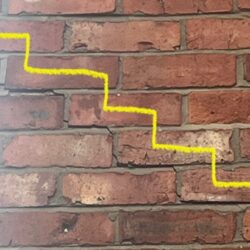
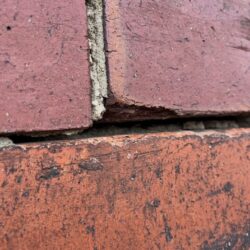
Horizontal Cracking in Brickwork – Cracks typically follow mortar joists at regular intervals (matching tie spacing)
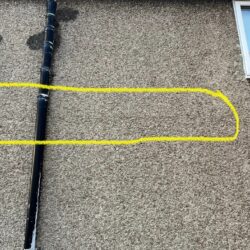
Bulging or bowed External Walls – The outer leaf begins to separate from the structure
Stepped Cracking Around Windows – Stress from expanding ties can cause cracking near openings
Rust Staining – Occasionally visible where corrosion is advanced
The Risks in Multi-Occupancy Buildings
In a block of flats, wall tie failure is not just cosmetic. It can lead to:
- Falling masonry
- Collaped walls
- Water Ingress
- Reduced structural stability
- Increased liability for freeholders or managing agents
Under UK legislation, building owners have a duty to maintain structural safety. Failure to address wall tie issues could result in insurance complications.
How Wall Tie Failure Is Diagnosed
A professional wall tie survey typically includes:
- Visual inspection of external elevations
- Metal detection scanning to locate existing ties
- Borescope inspection within the cavity
- Assessment of tie type and condition
At Trustguard Ltd, we provide detailed condition reports outlining the extent of corrosion and recommended remedial action.
Remedial Solutions
The good news: Wall tie failure can be resolved without rebuilding the entire wall.
Installation Of Stainless Steel Remedial Ties – New corrosion-resistant ties are inserted at calculated centres
Isolation or Removal of Failed Ties – Existing corroded ties are either removed or mechanically isolated to prevent further expansion damage
Crack Stitching & Masonry Repairs – Where cracking has occurred, we install reinforcement bars within mortar beds to restore structural continuity
All works are carefully phased to minimise disruption to residents in occupied buildings.
When Should You Arrange a Survey?
If your block was built between 1920 and 1985 and shows any signs of cracking or wall movement, a specialist survey is strongly recommended.
Early intervention reduces repair costs and prevents larger structural issues.
Need Specialist Advice?
If you’re a freeholder, property manager, or residents’ association concerned about structural cracking in your building, Trustguard Ltd can help.
We specialise in structural repair solutions for residential blocks and multi-occupancy buildings across Newcastle Upon Tyne, County Durham, Sunderland & Middlesbrough, providing clear reporting and long-term remedial strategies.
Contact our team today to arrange a professional wall tie inspection.
FAQ
Frequently Asked Questions About Wall Tie Failure
How much does wall tie replacement cost in a block of flats?
Costs vary depending on height, access requirements, and extent of damage. Scaffold access is usually required for multi-storey buildings.
Is Wall Tie Failure Dangerous?
Yes. If left untreated, it can lead to bulging masonry and potential structural instability.
How Long Do Wall Ties Last?
Older mild steel wall ties can fail after 30-50 years, particularly in exposed locations.
Do You Need Scaffolding to Replace Wall Ties in Flats?
In most cases, Yes- especially for buildings above two storeys.
Check out our Myths Or Facts Wall Tie Blog for more information on one of the most misunderstood structural issues in North East Homes.