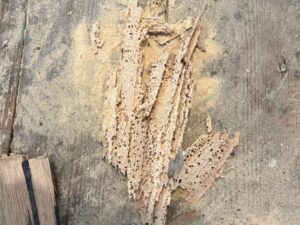






Signs of Woodworm Infestation
The most common questions we receive about woodworm are: “How do I know if I have active woodworm or if it is historic?” and “How do you get woodworm?”
We have put together a very simple checklist for you to look out for:
Common signs of woodworm infestation are
- Exit Hole in the wood – Small round holes (typically 1-2 mm in diameter). These are where adult beetles have exited the wood.
- Fine power (Frass) – Light- coloured, dust-like powder around holes or on the surface.
- Tunnels inside the wood – If you break open a piece of infested wood, you may see a network of tunnels.
- Crumbling or weak wood – Wood may break easily or feel soft, especially around the edges
- Live or dead beetles – You may see small beetles near the wood or on windowsills, especially during late spring to summer when the adult beetles are emerging.
- Eggs or larvae – Harder to spot, but larvae (grubs) live inside the wood and do most of the damage.
- Noise – In some severe cases, you might hear a faint ticking sound from larvae chewing inside the wood.
What makes wood vulnerable to woodworm?
- Wood with a high moisture content is highly attractive to beetles. If you have damp or humid wood, then it is most at risk from a woodworm infestation.
- Softwood and sapwood are easier for larvae to digest.
- Poor ventilation promotes the humid conditions that woodworms prefer, so enclosed spaces like attics or basements are prone to infestation.
- Lack of treatment or unsealed wood is more attractive
Active or Historic Woodworm
In short, you will need to contact a specialist to be 100% certain that your property is free of all woodworm. Our specialist surveyors will identify what type of woodworm you have and complete a proper woodworm treatment for your property. Even if you think the woodworm holes are historic, it is always best to get this checked as if in structural timbers (beams or joists) then this could make your property structurally vulnerable.
The woodworm cycle
Female beetles are attracted to wood with suitable conditions (as mentioned above), they lay eggs in the cracks, joints, or old exit holes – Tiny larvae burrow into the wood, where they feed on it for several months to several years depening on the species – Once mature, larvae pupate and turn into adult beetles inside the wood – The adults then chew their way out, leaving round “exit holes” – The cycle then repeats
If you have concerns about woodworm, get in touch with our friendly team today on 0191 4159471 or complete our online form here.
More information regarding woodworm and our services can be found on our website.