


How to Identify Wall Tie Failure on Pebble Dash Walls
Wall tie failure is a common but often hidden defect in UK homes with pebble-dash external walls because the render covers the brickwork; early warning signs are frequently missed until cracking or bulging becomes obvious.
In this guide, we explain how to identify wall tie failure on pebble dash walls, what symptoms to look for, and when a professional wall tie survey is required.
What Are Wall Ties and Why Do They Fail?
Wall ties are metal components built into cavity walls to hold the outer and inner masonry leaves together. Many UK properties built between 1920 and 1985 used mild steel wall ties, which are prone to corrosion.
When wall ties rust:
- They expand
- This expansion causes cracking and bulging
- Structural stability of the external wall is compromised
Pebble dash can mask these warning signs, allowing damage to progress unnoticed.
Key Signs of Wall Tie Failure on Pebble Dash Walls
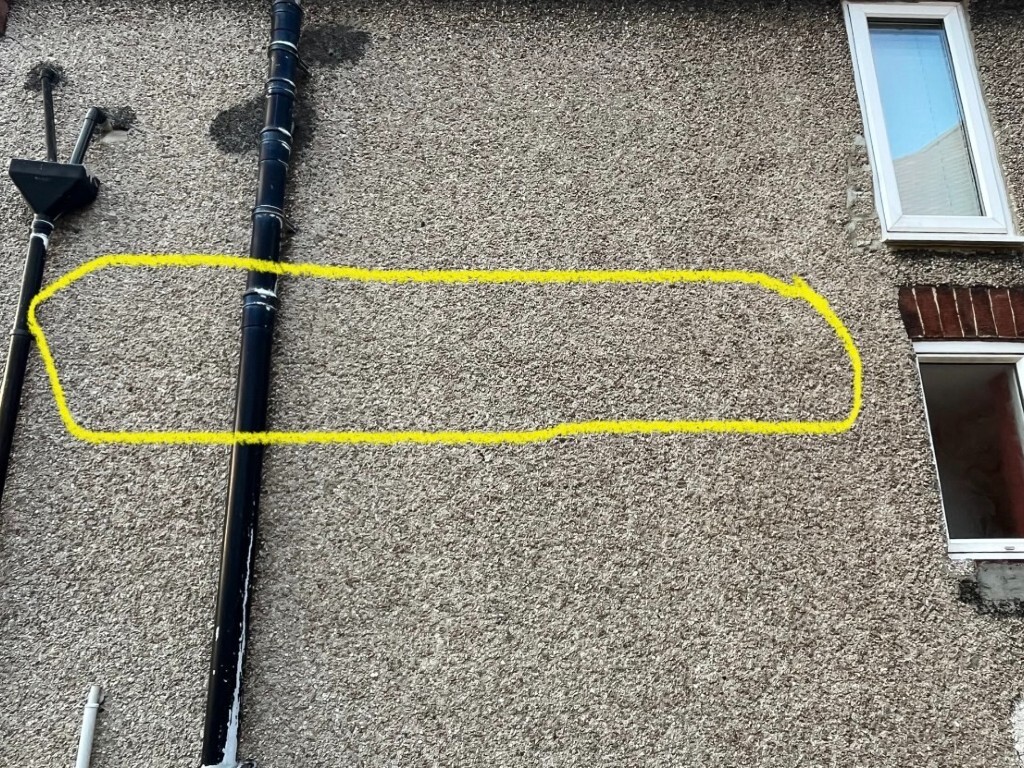
- Horizontal cracks in the pebble dash
- Bulging or bowing external walls
- Ripple or “Quilted” wall appearance
- Cracks around windows and doors
- Rust staining through the render
- Internal signs of wall tie failure
How Professionals Confirm Wall Tie Failure
It is important, if you have concerns regarding wall tie failure, that you instruct a specialist survey to be completed. A typical wall tie survey includes:
- Visual inspection of the walls
- Small inspection holes drilled externally
- Borescope camera inspection
- Identification of tie type and corrosion level
- Assessment of cavity condition
Wall tie failure on pebble dash walls is very easy to miss but serious if ignored. Regular cracking patterns, bulging elevations, and rippling finsihes are strong indicators that wall ties may be corroding behind the render.
A professional wall tie survey is the safest way to confirm the issue and protect the long-term stability of your property.
More information regarding cavity wall tie failure in your area can be found in our blog